Ecommerce operations
Returns management that protects your margin before the parcel comes back
Returns management is everything a store does with a return, from the policy and the customer's request to the refund, the restock and what the return reasons tell you. It decides what each return costs you.
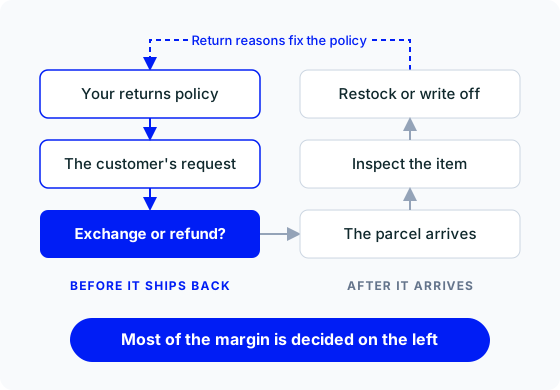
What returns management covers#
Most people picture the warehouse, but that's the last stop. Returns management starts with your policy (the window, what's final sale, who pays postage) and ends with what happens to the item and to the reason the customer gave for sending it back.
Returns management vs RMA#
An RMA number is one step inside returns management: the approval and reference you issue before anything ships back. Returns management is the whole loop around it.
The return management process#
- Set the policy: the return window, the exceptions, and who pays to send it back.
- Take the request and check it against the policy.
- Decide between an exchange and a refund.
- Issue the RMA number and a return label.
- Receive the parcel and inspect what came back.
- Restock it, sell it as seconds, or write it off.
- Tag the reason, and fix whatever caused it.
Where the margin goes#
By the time a parcel reaches your warehouse, most of the money's already been decided. The postage is paid, and so is the decision between an exchange and a refund. That decision is the biggest lever you have: a customer who swaps a medium for a large keeps the revenue with you, and a refund doesn't.
The reasons matter just as much. If "runs small" keeps coming up on one product, the fix is a better size guide, and the returns team can't do that for you.
And a clear-cut request that waits four days in a queue annoys a customer you could have kept, while an agent spends time on a decision your policy already made.
How Hay.chat handles returns#
With Shopify connected, Hay.chat checks which items on an order are eligible and opens the return. If your playbook says to offer an exchange first, it does. When the case is clear-cut by your rules, it issues the refund, and it can never refund more than Shopify says is refundable. On WooCommerce it can refund too, or create a coupon when a goodwill gesture fits better. Connect Stripe and it handles exchanges as well as refunds.
Anything outside your rules, like a damaged item or a return two days past the window, goes to your team with the order and the conversation attached. Opening the box stays with you as well. Writing the playbook is your job, and so is keeping it current as your return reasons change. The full list of what Hay.chat can do is on the actions page.
 30-day free trial